Farm & Ranch Fence in Tyler, TX
Farm and ranch fence around Tyler covers cow-calf pasture, hay meadows, horse lots and small acreage with a few goats. Outside the city, much of Smith County is open grass and post oak, and the fence has to match what it's holding. Barbed wire, woven wire and cross fencing all go up on solid braces, with gates that stay square.
Rural fence isn't priced like a backyard job. Total footage, corners, terrain, clearing and the kind of livestock all change the build and the number.
Free farm & ranch fences quote
Takes about 30 seconds. Prefer to talk? (903) 618-3812
Please add your name and a phone number we can reach you at, then send again.
Fencing cattle and hay ground in Smith County
Hay is one of Smith County's main crops, and beef cattle are common on the pasture around it. Hay meadows need gates wide enough for balers and trucks, and cattle pasture needs fence that holds when cows lean through it for greener grass. Post oak and blackjack along the line drop limbs on wire, so a cleared, mowed strip makes trouble easy to spot.
The ground decides the bracing. Sandy uplands drain well and hold a driven post, but creek bottoms toward the Neches and Sabine stay soft for weeks, and red clay ridges with ironstone gravel can stop a post driver cold. Each corner, end and gate post needs an H-brace built for the soil it sits in; that's what keeps a long run of wire tight.
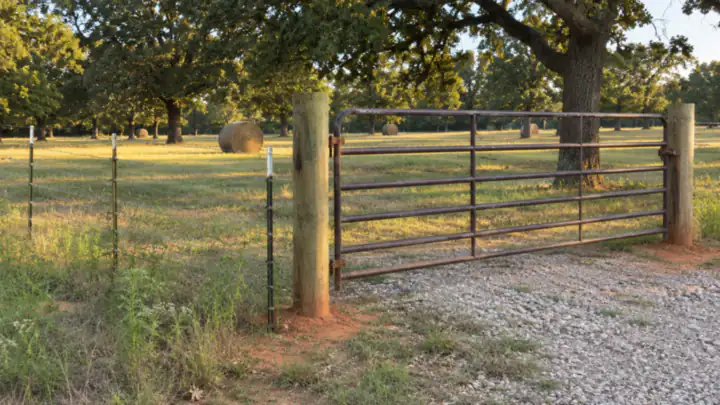
Farm and ranch fence options
Barbed wire
The standard beef cattle fence: four or five strands of barb on steel T-posts, braced with treated wood or pipe.
Woven wire
Small openings for goats, sheep and young calves, usually with one barbed strand along the top.
Horse fence
Pipe rail, board or no-climb mesh with a sight board, so horses can see it and won't tangle in barbs.
Cross fencing
Interior fences that divide pasture for rotational grazing or separate bulls, calves and horses.
Pipe and tube gates
Gates wide enough for hay equipment and stock trailers, hung on braced posts.
What a ranch fence quote depends on
- Total footage, plus the count of corners, braces and gates.
- Wire: barbed costs less than woven or no-climb.
- Clearing brush, saplings and old fence from the line.
- Creek crossings, wet bottoms, slopes and rocky ridges.
- Posts: T-posts, treated wood, or drill stem and pipe.
- Gate widths for hay equipment and trailers.
Farm & Ranch Fence questions
What fence holds cattle best on a Smith County place?
For most beef cattle, a well-braced four- or five-strand barbed wire fence on T-posts does the job. Add woven wire if you run calves, goats or sheep, and consider an electric strand along the inside if cattle keep pushing on the fence.
Does the fence line need clearing first?
Usually, yes. A cleared strip wide enough to drive along lets the crew run straight wire and set braces properly, and it gives you a path to check the fence after storms. Clearing can be part of the quote, or you can handle it ahead of time.
More fence services
Farm & Ranch Fence in Tyler: get your free quote
Give a rough footage and tell us what the fence has to hold, and someone will walk the line on your Smith County place and price it.